ASTHMA
Description
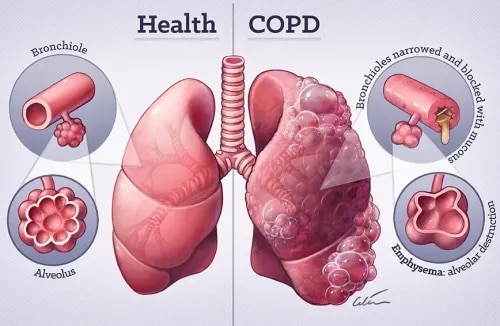
Asthma is a chronic inflammatory disease of the airways that causes difficulty in breathing. It happens when the airways in the lungs become:
• Inflamed (swollen)
• Narrowed
• Filled with excess mucus
• Overly sensitive to triggers
This leads to reversible airway obstruction, meaning symptoms can improve with treatment.
⸻
Common Symptoms
• Wheezing (whistling sound while breathing)
• Shortness of breath
• Chest tightness
• Persistent cough (especially at night or early morning)
• Difficulty speaking during severe attacks
Symptoms may be mild, moderate, or severe.
⸻
Causes & Risk Factors
Asthma is caused by a mix of genetic and environmental factors.
1. Genetic Factors
• Family history of asthma
• Allergies (atopy)
2. Environmental Triggers
• Dust mites
• Pollen
• Pet dander
• Smoke (cigarettes, pollution)
• Cold air
• Exercise
• Respiratory infections
• Strong perfumes or chemicals
⸻
Types of Asthma
1. Allergic Asthma – Triggered by allergens like pollen or dust.
2. Non-allergic Asthma – Triggered by infections, stress, weather.
3. Exercise-induced Asthma
4. Occupational Asthma – Caused by workplace irritants.
5. Childhood Asthma
6. Severe Asthma – Difficult to control with standard treatment.
⸻
Asthma Attack (Acute Exacerbation)
An asthma attack occurs when symptoms suddenly worsen.
Warning Signs:
• Rapid breathing
• Severe wheezing
• Blue lips or fingernails (cyanosis)
• Inability to speak full sentences
• No relief from inhaler
⚠️ Severe attacks are medical emergencies.
⸻
Diagnosis
Doctors diagnose asthma using:
• Medical history
• Physical examination
• Spirometry (lung function test)
• Peak flow measurement
• Allergy testing
⸻
Treatment of Asthma
Asthma cannot be cured, but it can be controlled.
1. Quick-Relief Medicines (Rescue Inhalers)
2. Long-Term Control Medicines
3. Non-Drug Management
• Avoid triggers
• Use air purifiers
• Maintain healthy weight
• Regular follow-up
• Vaccination (flu vaccine)
⸻
Complications (If Uncontrolled)
• Frequent hospital visits
• Reduced lung function
• Sleep problems
• Severe respiratory failure (rare but life-threatening)
⸻
Prevention & Control Tips
- VACCINATION
• Use inhalers correctly
• Avoid smoking and secondhand smoke
• Keep home dust-free
• Take prescribed medication regularly